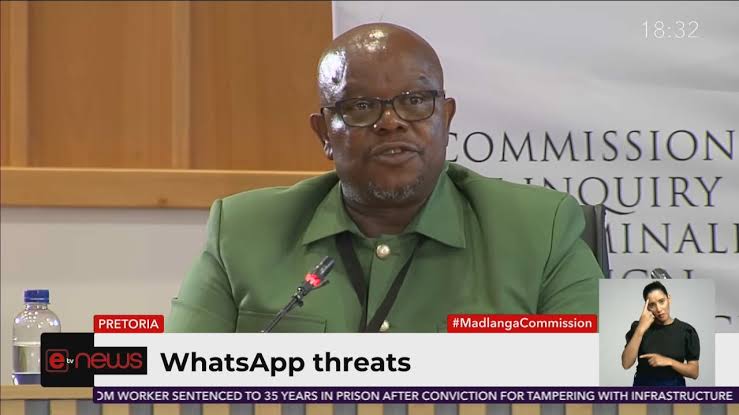
The Lesetja Senona biography captures the life and career of one of South Africa’s most experienced and closely watched law-enforcement officers. Known for his decades-long service within the South African Police Service (SAPS), Lesetja Senona rose through the ranks to become a Major-General and Provincial Head of the Directorate for Priority Crime Investigation (DPCI), popularly known as the Hawks, in KwaZulu-Natal. His professional journey reflects discipline, endurance, and institutional loyalty, while his recent public visibility has placed him at the center of national discourse on governance, accountability, and law enforcement integrity.
The Lesetja Senona biography is not merely a record of promotions and appointments but a reflection of South Africa’s evolving policing environment from the late apartheid era through the democratic transition and into the modern fight against organized crime and corruption. Over more than four decades, Senona has served in intelligence, investigations, and leadership roles, making him a significant figure within SAPS. His career offers insight into the complexities of policing in a country grappling with high-level crime, political pressure, and public scrutiny.
In recent years, the Lesetja Senona biography has attracted heightened public attention due to his testimony before commissions of inquiry and media coverage surrounding the Hawks’ operations. Despite controversies and allegations that have surrounded senior officials across South Africa’s justice system, Senona has consistently maintained his stance of professionalism and denied any wrongdoing. His life story therefore stands at the intersection of service, controversy, and institutional reform.
Early Days
The early life of Lesetja Senona remains largely private, a characteristic that aligns with his reserved personality. Born in South Africa during a period of intense political and social transformation, Senona grew up in an environment where authority structures and public institutions were deeply shaped by apartheid governance. These formative years influenced his later decision to pursue a career in law enforcement, a path that would place him within the very system undergoing national redefinition.
From available public records, the Lesetja Senona biography suggests that his early years were shaped by discipline, resilience, and a strong sense of duty. Like many South Africans of his generation, he came of age during a time of uncertainty and systemic inequality, factors that often motivated young men to seek stability through public service careers. His entry into policing was not accidental but rather a deliberate choice rooted in structure, order, and long-term commitment.
Senona’s early exposure to authority and governance likely influenced his later leadership style—measured, procedural, and deeply institutional. Although details about his childhood education and upbringing remain undisclosed, his later academic pursuits and professional training indicate a lifelong investment in self-development and formal qualification.
Real Name
The real name of the senior police officer widely known today is Lesetja Senona. There is no evidence of aliases or alternative official names associated with his career or public records. Throughout his service within SAPS and the Hawks, he has been formally identified by this name in all official appointments, legal proceedings, and public testimonies.
In the context of the Lesetja Senona biography, the consistency of his name across decades of service reflects administrative transparency and a straightforward professional identity. This is particularly relevant in law enforcement environments where name changes or informal identifiers sometimes complicate public records.
State of Origin
Lesetja Senona is of South African origin, though his specific province or ethnic homeland has not been officially disclosed in public documents. Like many senior security officials, he has maintained discretion regarding personal background details, focusing public attention on his professional role rather than his regional or ethnic roots.
Within the Lesetja Senona biography, this lack of detailed disclosure is not unusual. Senior figures within SAPS often limit personal exposure due to security concerns and the sensitive nature of their work. Nevertheless, his long-standing service across multiple provinces suggests a career shaped by national rather than regional identity.
Nationality
Lesetja Senona is South African by nationality. His entire professional life has been dedicated to serving South Africa through its national policing structures. Joining SAPS in 1985, he became part of a generation of officers who witnessed the transition from apartheid policing to democratic law enforcement.
The Lesetja Senona biography underscores his identity as a career public servant whose loyalty has remained aligned with the South African state rather than any political faction. His nationality is central to understanding his role in safeguarding national security and upholding the rule of law.
Age
Lesetja Senona’s exact date of birth has not been publicly released. However, given that he joined the South African Police Service in 1985, analysts estimate that he is likely in his late 50s or early 60s as of 2026.
In the broader Lesetja Senona biography, his age reflects extensive institutional memory. With over forty years of policing experience, Senona belongs to a shrinking group of officers whose careers span pre- and post-democratic South Africa. This longevity places him in a unique position to understand both historical and contemporary challenges facing the country’s security sector.
Family
Lesetja Senona is a family man who has largely kept his private life out of public view. Available information confirms that he has at least one son, and his family has occasionally been mentioned in media reports related to business dealings and public inquiries.
The Lesetja Senona biography shows that his family has not sought public attention, and Senona himself has remained protective of their privacy. This approach aligns with security best practices for high-ranking law enforcement officials, whose families can become vulnerable to public scrutiny or threats.
Spouse
Details about Lesetja Senona’s spouse are not publicly available. He is known to be married, but his wife’s identity, profession, and public presence have been deliberately kept private.
Within the Lesetja Senona biography, this discretion reflects a broader pattern of personal restraint. By separating his professional obligations from his domestic life, Senona has maintained a clear boundary between public service and family affairs.
Career
The career of Lesetja Senona is the most defining aspect of his public identity. He joined the South African Police Service in 1985, beginning a journey that would span more than four decades. His early assignments involved foundational policing roles, where he gained hands-on experience in investigations, intelligence, and operational enforcement.
As outlined in the Lesetja Senona biography, his steady progression through the ranks was driven by performance, training, and institutional trust. Over the years, he undertook advanced policing education, including a BTech degree in Policing, complemented by leadership and management programs. These qualifications prepared him for senior command responsibilities.
Senona later served in intelligence-related units, a critical area within SAPS that demands discretion, analytical skill, and strategic thinking. His work in this domain strengthened his reputation as a disciplined and methodical officer. In 2017, he was promoted to the rank of Brigadier, marking his transition into executive leadership.
The pinnacle of his career came with his appointment as Provincial Head of the Hawks (DPCI) in KwaZulu-Natal, one of South Africa’s most strategically important and crime-challenged provinces. In this role, he oversaw investigations into organized crime, corruption, economic offenses, and high-profile criminal networks.
The Lesetja Senona biography also records a period of intense public scrutiny during his leadership of the Hawks. His testimony before national commissions of inquiry brought his name into widespread media coverage. While allegations and questions were raised regarding professional associations and operational decisions, Senona consistently denied misconduct and emphasized adherence to legal and institutional procedures.
Regardless of controversy, his career remains emblematic of long-term public service in one of South Africa’s most demanding sectors.
Net Worth
Lesetja Senona’s net worth has not been officially disclosed. As a senior public servant, his primary source of income is believed to be his salary and benefits as a Major-General within SAPS.
In the context of the Lesetja Senona biography, any discussion of wealth remains speculative. Unlike business executives or politicians with declared assets, law enforcement officials in South Africa are not required to publicly disclose net worth figures unless under specific legal investigation. Senona has not publicly presented himself as a wealthy individual, and his lifestyle appears consistent with senior civil service norms.
FAQs About Amad Diallo Biography
Q1: Who is Amad Diallo?
Amad Diallo is a professional footballer from Côte d’Ivoire who plays as a winger for Manchester United.
Q2: What is Amad Diallo’s nationality?
Amad Diallo is Ivorian by nationality.
Q3: How old is Amad Diallo?
Amad Diallo was born in 2002.
Q4: What club did Amad Diallo join from Atalanta?
He joined Manchester United from Atalanta in 2021.
Q5: Is Amad Diallo related to Lesetja Senona?
No, there is no known relationship between Amad Diallo and Lesetja Senona.
Conclusion
The Lesetja Senona biography presents the portrait of a seasoned law enforcement officer whose life has been defined by duty, structure, and national service. From his early days in SAPS to his leadership of the Hawks in KwaZulu-Natal, Senona’s career reflects both the opportunities and challenges inherent in policing a complex society.
While public scrutiny has intensified around his later years in service, the Lesetja Senona biography remains rooted in over four decades of professional commitment. His story mirrors South Africa’s broader struggle to balance security, accountability, and institutional integrity.